Stamped vs Counted Cross Stitch: What’s the Difference?
If you’ve been looking at cross stitch kits, you may have come across two different types: stamped cross stitch and counted cross stitch.
Not sure whether to try stamped or counted cross stitch? Discover the differences between the two methods, their advantages and how to choose the right one for you.
Both allow you to create beautiful pictures using embroidery thread and small cross-shaped stitches, but the way you work on them is quite different.
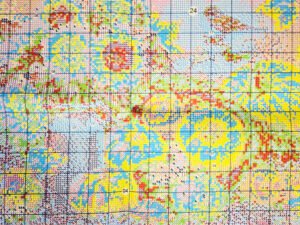
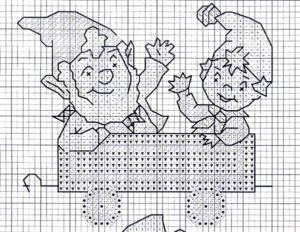
With stamped cross stitch, the design is printed directly onto the fabric, giving you a visual guide to follow. With counted cross stitch, you work from a chart and count the fabric holes to determine where each stitch belongs.
So, which one is better? Is stamped cross stitch easier for beginners? And does counted cross stitch offer more choice?
The answer depends on what you enjoy, how you like to work and what you want to get out of your stitching.
Let’s look at the differences so you can decide which is right for you.
What Is Stamped Cross Stitch?
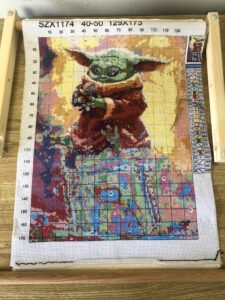 Stamped cross stitch is a type of embroidery where the design is printed directly onto the fabric.
Instead of counting stitches from a separate chart, you use the printed design as your guide. You match your embroidery thread to the colours or instructions provided with your kit and stitch over the corresponding areas.
Many stamped cross stitch kits include printed Aida fabric, embroidery floss, needles and other accessories to help you get started.
One of the biggest advantages is that you can see the design on your fabric before you begin stitching. You don’t need to work out every stitch position from a chart.
This makes stamped cross stitch particularly appealing to beginners, although experienced stitchers can enjoy it just as much.
It is also a useful option if you prefer a straightforward project that lets you concentrate on stitching rather than counting.
Who might enjoy stamped cross stitch?
- Beginners who want an accessible introduction to cross stitch.
- Stitchers who find counting charts difficult or frustrating.
- People who prefer to see the design directly on their fabric.
- Crafters who want to pick up a project without too much preparation.
- Experienced stitchers who enjoy working on a different type of project.
If you’d like to learn more, read our guide to What Is Stamped Cross Stitch? A Beginner’s Guide
What Is Counted Cross Stitch?
Counted cross stitch is the traditional chart-based approach to cross stitch.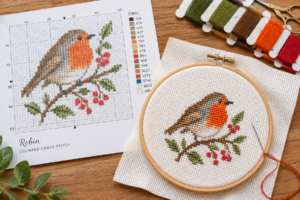
Rather than having the design printed on your fabric, you follow a pattern that uses symbols, colours or a combination of both to show where each stitch belongs. You count the holes in your fabric to work out where to place each stitch. Every symbol on the chart represents a particular thread colour or stitching instruction.
This means you need to pay attention to your chart and keep track of where you are in the pattern. It may sound complicated at first, but many people find counted cross stitch very satisfying once they get the hang of it.
Counted cross stitch also offers an enormous variety of patterns, from simple designs to detailed landscapes, portraits and intricate artwork.
Who might enjoy counted cross stitch?
- Stitchers who enjoy following charts.
- People who like detailed and intricate designs.
- Crafters who want a wide choice of patterns.
- Those who enjoy planning colours and counting stitches.
- Stitchers who want to create designs from charts or work with patterns they have purchased separately.
Counted cross stitch can take a little practice, particularly when you’re learning to read charts and keep track of your position, but it can become second nature with experience.
Stamped vs Counted Cross Stitch: The Main Differences
Although the basic cross stitch technique is much the same, there are some important differences between the two methods.
| Feature | Stamped Cross Stitch | Counted Cross Stitch |
| Design placement | Printed directly onto the fabric | Shown on a separate chart |
| Working out stitch positions | Follow the printed design | Count fabric holes using the chart |
| Getting started | Usually straightforward | May require more preparation |
| Keeping your place | Follow the printed areas | Track your position on the chart |
| Pattern choice | Depends on the available stamped kits | Very wide variety of charts and patterns |
| Fabric | Often printed Aida or similar fabric | Usually blank Aida, evenweave or linen |
| Colour guidance | Printed colours or markings, depending on the kit | Symbols and/or colours on the chart |
| Preparation | Often minimal | May involve locating the centre and counting out the design |
| Difficulty | Often easier to approach for beginners | Can range from simple to very challenging |
| Best suited to | People who prefer a visible design guide | People who enjoy chart-based stitching |
Neither method is automatically better than the other. Both can produce beautiful results, and both can be as simple or as challenging as the design you choose.
Is Stamped Cross Stitch Easier Than Counted Cross Stitch?
For many beginners, stamped cross stitch is easier to get started with.
The design is already printed onto the fabric, so you can see where you need to stitch. You don’t have to continually refer to a chart to work out where the next stitch belongs. That can make the first steps less intimidating, especially if you’re new to embroidery.
Counted cross stitch requires you to learn how to read a chart, count the fabric holes and keep track of your position. Some people enjoy that extra challenge, while others find it takes a little getting used to.
However, it’s worth remembering that the difficulty also depends on the design itself.
A small, simple counted cross stitch pattern may be much easier than a large stamped design with lots of colours and intricate details.
Similarly, stamped cross stitch isn’t always effortless. Larger projects can take considerable time, and you still need to pay attention to your thread colours, stitches and the printed design.
If you’re a beginner, I’d suggest choosing a design you genuinely like rather than worrying too much about how quickly you’ll finish it. Enjoying the picture you’re creating is a great reason to keep stitching.
Which Has More Design Choices?
This is where counted cross stitch has an advantage.
Counted cross stitch patterns are available in an enormous range of styles, sizes and levels of detail. You can find everything from simple flowers and geometric patterns to elaborate landscapes, wildlife, portraits and decorative designs.
Because the design is supplied as a chart rather than printed onto the fabric, you can also purchase a pattern and choose your own suitable fabric and threads.
Stamped cross stitch also offers plenty of variety, including flowers, animals, landscapes, seasonal pictures and decorative designs. However, your choices depend on which designs manufacturers produce as stamped kits.
If you’re looking for a very specific subject, you may find more options in counted cross stitch. If you find a stamped design you love, though, having the picture already printed on the fabric can make the stitching experience much more straightforward.
Ultimately, the best design is one you’ll enjoy working on.
Do You Need Different Equipment for Each Type?
Not necessarily.
Both methods generally use embroidery needles, embroidery floss and suitable stitching fabric.
The main difference is how the design is presented and how you work out where each stitch belongs.
A stamped cross stitch kit will often include the printed fabric and the threads needed for the design. Depending on the kit, you may also receive needles, scissors, a needle threader and other useful accessories.
With counted cross stitch, you generally need blank fabric, a chart and the correct embroidery threads. Some kits supply everything together, while other patterns require you to purchase the materials separately. Extra tools would be a magnetic board for your chart, and a magnetic ruler to keep you place. A marker pen for cross off the stitches completed also helps.
Whichever method you choose, it’s worth checking exactly what’s included before buying a kit.
If you’re just starting out, a kit containing the fabric, threads and basic tools can make the whole process easier.
Can You Wash Stamped Cross Stitch?
This is an important question, particularly if you’re making a piece to frame or give as a gift.
Most stamped cross stitch designs use water-soluble printing, while others use different printing methods. You should never assume that every stamped design can be washed in the same way. Always check the manufacturer’s instructions before washing your project.
If the printing is designed to wash out, the instructions should explain how to remove it safely. Other fabrics may require different handling.
It’s also important to consider the embroidery threads, as some colours may bleed if washed incorrectly. Although today, most embroidery threads are colourfast.
With counted cross stitch, there is no printed design to remove, but the fabric and threads still need appropriate care.
In either case, follow the kit’s care instructions rather than relying on a general washing method.
Can You Switch Between Stamped and Counted Cross Stitch?
Absolutely!
You don’t have to choose one method and stick with it forever. Many crafters enjoy trying different techniques and choosing projects according to their mood, available time or the design they want to create.
You might prefer stamped cross stitch when you want a clear visual guide and counted cross stitch when you fancy working from a detailed chart. And you may even discover that you enjoy both equally.
The basic cross stitch itself is very similar, so experience with one method can help you feel more comfortable trying the other.
If you’re already familiar with counted cross stitch, stamped cross stitch can be a refreshing change. And if you start with stamped cross stitch, you may eventually decide to try a counted design.
There are no rules saying you must stick to one approach.
Which Should You Choose: Stamped or Counted Cross Stitch?
If you’re still undecided, here are a few things to consider.
Choose stamped cross stitch if:
- You want to see the design directly on your fabric.
- You prefer not to count stitches from a chart.
- You’re new to cross stitch and want a straightforward starting point.
- You enjoy having a visual guide to follow.
- You find a stamped design that you simply can’t resist.
Choose counted cross stitch if:
- You enjoy following patterns and charts.
- You want access to a particularly wide range of designs.
- You like the challenge of counting and planning your stitches.
- You want to select your own fabric and threads for a pattern.
- You enjoy working on detailed or intricate designs.
Of course, these are guidelines rather than strict rules. Beginners can learn counted cross stitch, and experienced stitchers can enjoy stamped designs. Your experience level doesn’t have to dictate which method you choose.
My Thoughts on Stamped Cross Stitch
One of the things I enjoy about crafting is that there are so many different ways to make something. Not every project needs to be complicated, and not every stitching session needs to involve concentrating on a chart.
Stamped cross stitch offers a straightforward way to get on with the stitching, follow the printed design and watch a picture gradually take shape. It’s also a reminder that you don’t have to be an expert to enjoy a craft. Sometimes, the pleasure comes from choosing a design you love and working on it a little at a time – and keep going, even in the ‘tough’ times.
Whether you’re new to cross stitch or have been stitching for years, there’s room for both stamped and counted projects in your craft basket.
Ready to Try Stamped Cross Stitch?
If stamped cross stitch sounds like your kind of project, take a look at the stamped cross stitch kits available through Stitches & Spindles – we are an affiliate of Painting Fiary Cross Stitch. Their printing and kits are top quality.
You may find a design that catches your eye and gives you a new project to enjoy.
And if you already love counted cross stitch, why not give stamped cross stitch a try? You might enjoy the change.
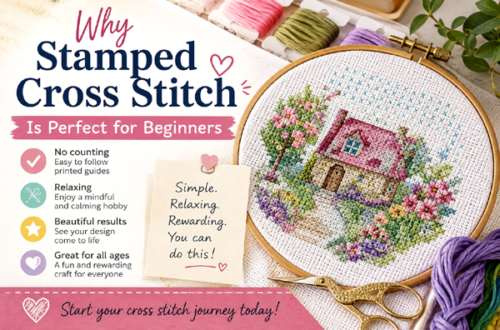
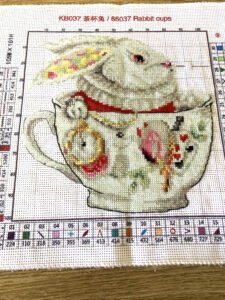
Below is a completed Stamped Cross Stitch – It just needs the backstitching.
Happy stitching!